Building a Pickleball Practice Routine at Home
Published How we research
Wall drills are the single most valuable at-home practice, turning a garage door or solid wall into an endless partner for dinks and volleys. Dedicated dink practice against the wall builds the soft-game touch that decides most matches, while serve and drop-shot practice with simple targets grooves reliable placement. Footwork drills like split steps and ladder patterns need no ball, and shadow swinging in a mirror builds clean, repeatable strokes. Fifteen to twenty minutes, three or four times a week, focused on one or two skills, outperforms occasional marathon sessions. Most players only touch a paddle when they show up for open play, which means their improvement stalls the moment games get competitive. The players who climb levels fastest are the ones who practice specific skills between games, and much of that practice can happen at home with minimal space and no partner. A short, focused routine a few times a week compounds quickly, turning shots you currently hope to make into shots you trust. You do not need a court to build a better game.
Products from this article
The highest-scoring picks from the buying guides this article links to. Scores are our editorial assessment, not customer ratings.
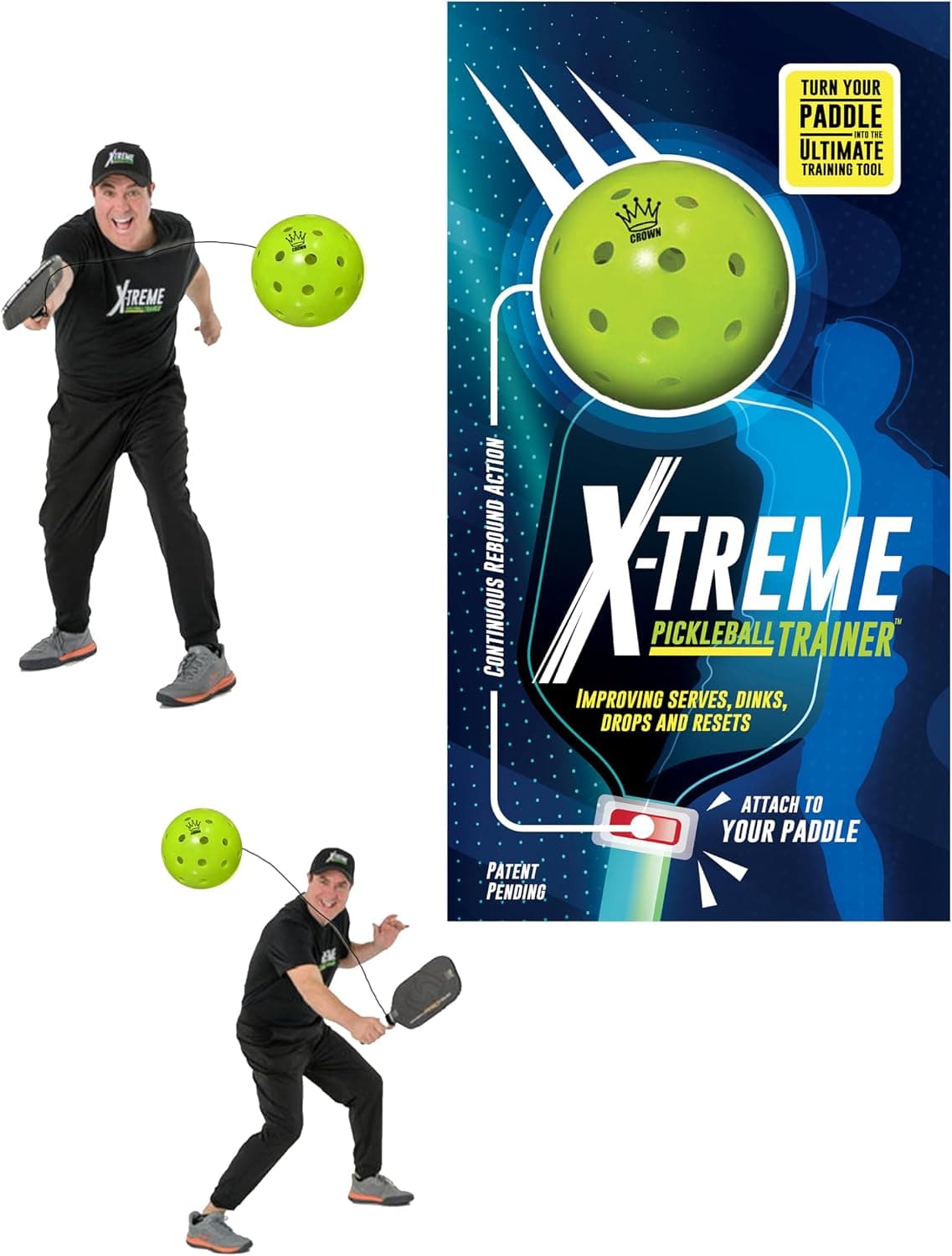
+ Portable rebounder lets you practice alone in a driveway or garage
From our guide: Best Pickleball Training Aids
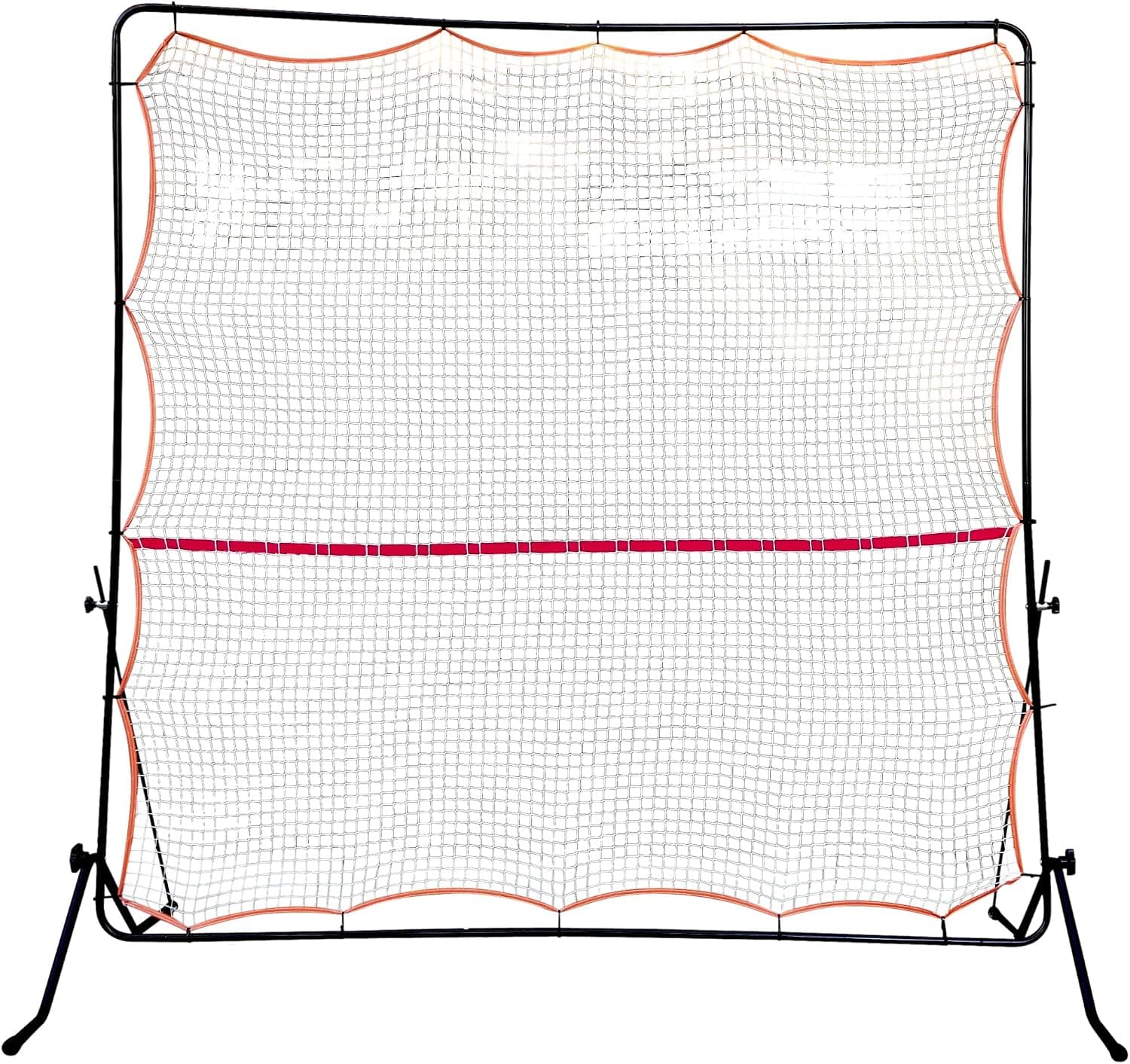
+ 7x7 ft frame gives a big target that returns most practice shots
From our guide: Best Pickleball Rebounders
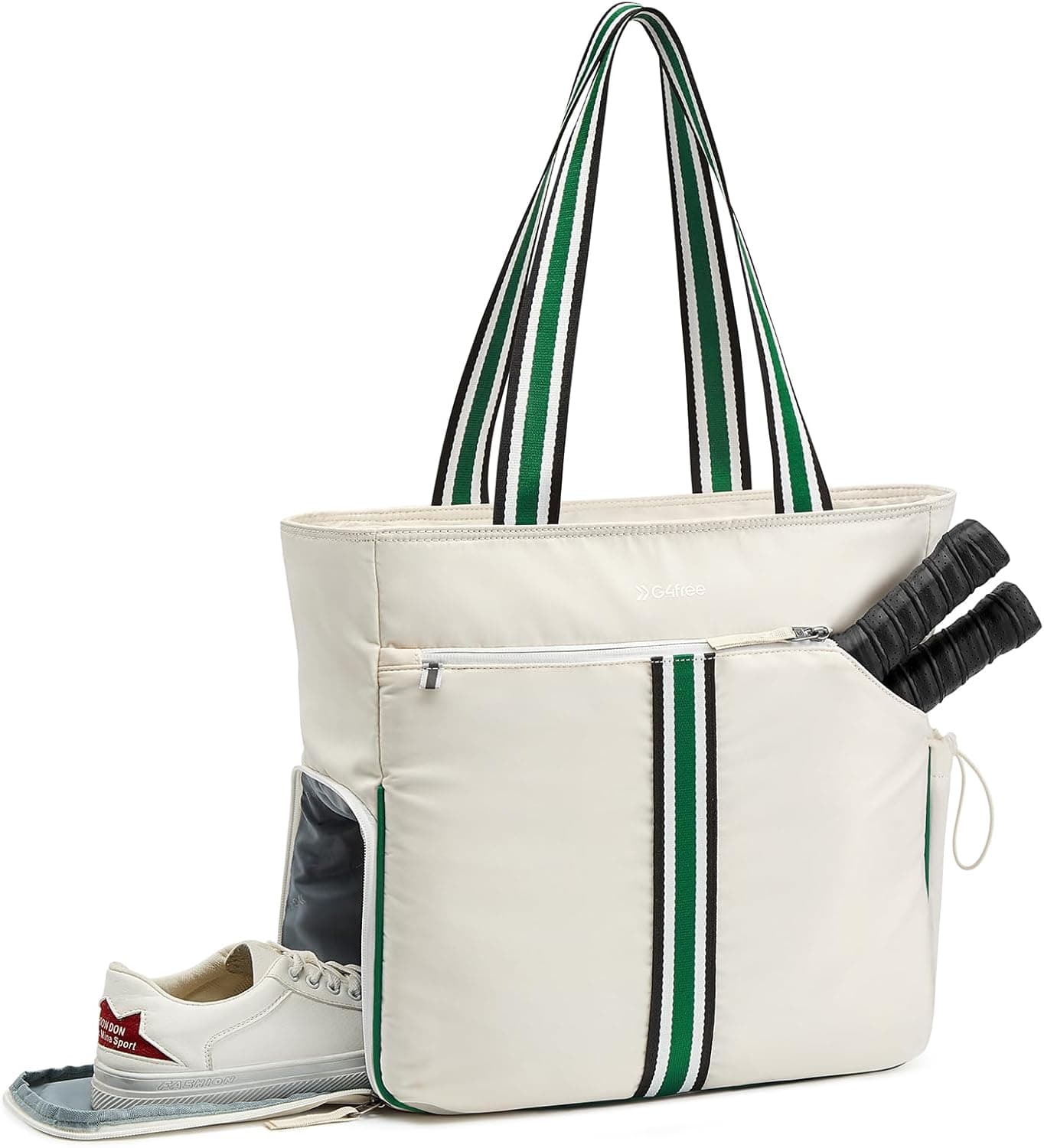
+ Shoe compartment keeps court shoes away from clean items
From our guide: Best Pickleball Court Bags
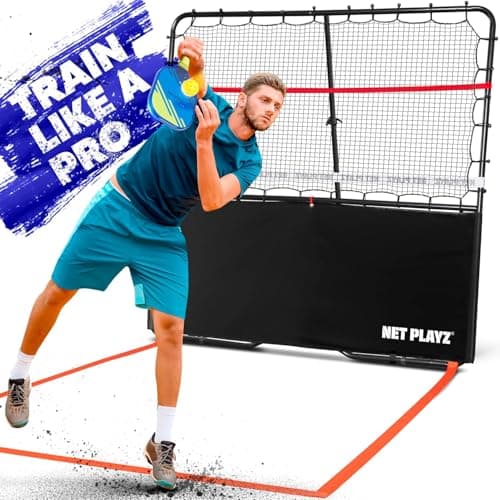
+ Fixed white webbing simulates a 3 ft net height, and an adjustable red webbing zone gives a target to aim at
From our guide: Best Pickleball Training Aids
Wall drills: the single most valuable practice
Start with wall drills, the single most valuable at-home practice a player can do. A garage door, a solid exterior wall, or a basement wall becomes an endless, patient partner that returns every ball. Stand a comfortable distance back and hit continuous dinks and volleys against the wall, focusing on soft control and a steady contact point rather than power. The wall exposes weaknesses instantly, because a sloppy paddle face sends the ball flying off at odd angles, and it rewards the compact, controlled stroke that wins real points at the kitchen line.
Dedicated dink practice builds the soft game
Dink practice deserves dedicated attention because the soft game is where matches at every level are decided. Against a wall, aim for a target zone and try to keep a rally going with soft, arcing shots, concentrating on quiet hands, a relaxed grip, and using your legs to lower your body rather than reaching down with your arm. Count your consecutive controlled dinks and try to beat your record. This trains the touch and consistency that let you neutralize aggressive opponents and set up your own attacks patiently.
Serve and drop-shot practice with targets
Serve and drop-shot practice can happen in any open space, even a backyard or driveway. Set up simple targets such as cones, towels, or chalk boxes and practice hitting your serve deep and to specific spots, since a reliable, well-placed serve wins easy points and a predictable one gives them away. The third-shot drop, arguably the most important shot in the game, can be grooved by dropping and hitting soft arcs toward a target, ideally over a low barrier that simulates the net. Repetition here builds the muscle memory you cannot develop in the middle of a live game.
Footwork drills need no ball at all
Footwork drills require no ball at all and fit into a small room. Practice the split step by hopping lightly onto the balls of your feet on a signal, then pushing off in a chosen direction. Set up a simple ladder pattern with tape on the floor and work on quick, light foot movements, or shuffle side to side between two markers to build the lateral quickness the sport demands. Even a few minutes of shadow movement, mimicking reaching for dinks and recovering to ready position, sharpens the balance and timing that separate smooth players from rushed ones.
Shadow swinging builds clean strokes
Shadow swinging in front of a mirror builds clean, repeatable strokes. Without a ball, slowly rehearse your serve, forehand, backhand, and volley, watching your form and grooving a compact, balanced motion. This is how you fix a hitch or an oversized backswing, because you can move slowly and feel the correct positions without the pressure of tracking a live ball. Practicing the motion correctly and repeatedly makes the right stroke automatic when the ball is actually coming.
Consistency beats duration
The key to any home routine is consistency and focus over duration. Fifteen or twenty minutes, three or four times a week, spent on one or two specific skills will outperform an occasional marathon session. Pick a weak spot, drill it deliberately, and track small improvements so you can see progress. Over a few weeks, the wall dinks, target serves, and footwork reps quietly rebuild your game, and you will walk onto the court with skills your open-play-only peers simply do not have. Practice is the shortcut, and most of it fits inside your own home.
Frequently asked questions
Can I practice pickleball without a partner? Yes. Wall drills, footwork drills, and shadow swinging all work solo and build real skills in small spaces without needing a court or partner.
What is the best solo pickleball drill? Wall dinks and volleys are considered the single most valuable at-home practice, since the wall returns every ball and exposes weaknesses in your paddle face and contact point instantly.
How often should I practice pickleball at home to improve? Fifteen to twenty minutes, three or four times a week, focused on one or two specific skills, outperforms an occasional marathon session and compounds quickly.
How do I practice the third-shot drop at home? Set up a low barrier to simulate the net and practice dropping and hitting soft arcs toward a target, repeating until the motion builds reliable muscle memory.
Popular right now
- Pickleball Court Dimensions ChartArticle
- Indoor vs Outdoor Pickleball Balls ExplainedArticle
- Best Wooden Pickleball PaddlesBuying guide
- Two-bounce rule explainedGlossary
- Dink explainedGlossary
- How to Tell if Your Pickleball Paddle Is Dead or Worn OutArticle
Based on the last 28 days of search and visitor data.