PicklePro Carbon Paddle Cleaner, Premium Rubber Pickleball Eraser for Raw Carbon Fiber Pickleball Paddles, Carbon Fiber Cleaning Block Review (2026)
Updated September 20, 2026 · Research-based review
Our verdict
The PicklePro Carbon Paddle Cleaner suits raw carbon fiber paddle owners who want an inexpensive rubber eraser to lift ball residue and restore surface grip between deep cleans. Its focused job of unclogging carbon texture is the main strength, and the trade-off is that it cannot repair worn or chipped paddle faces.
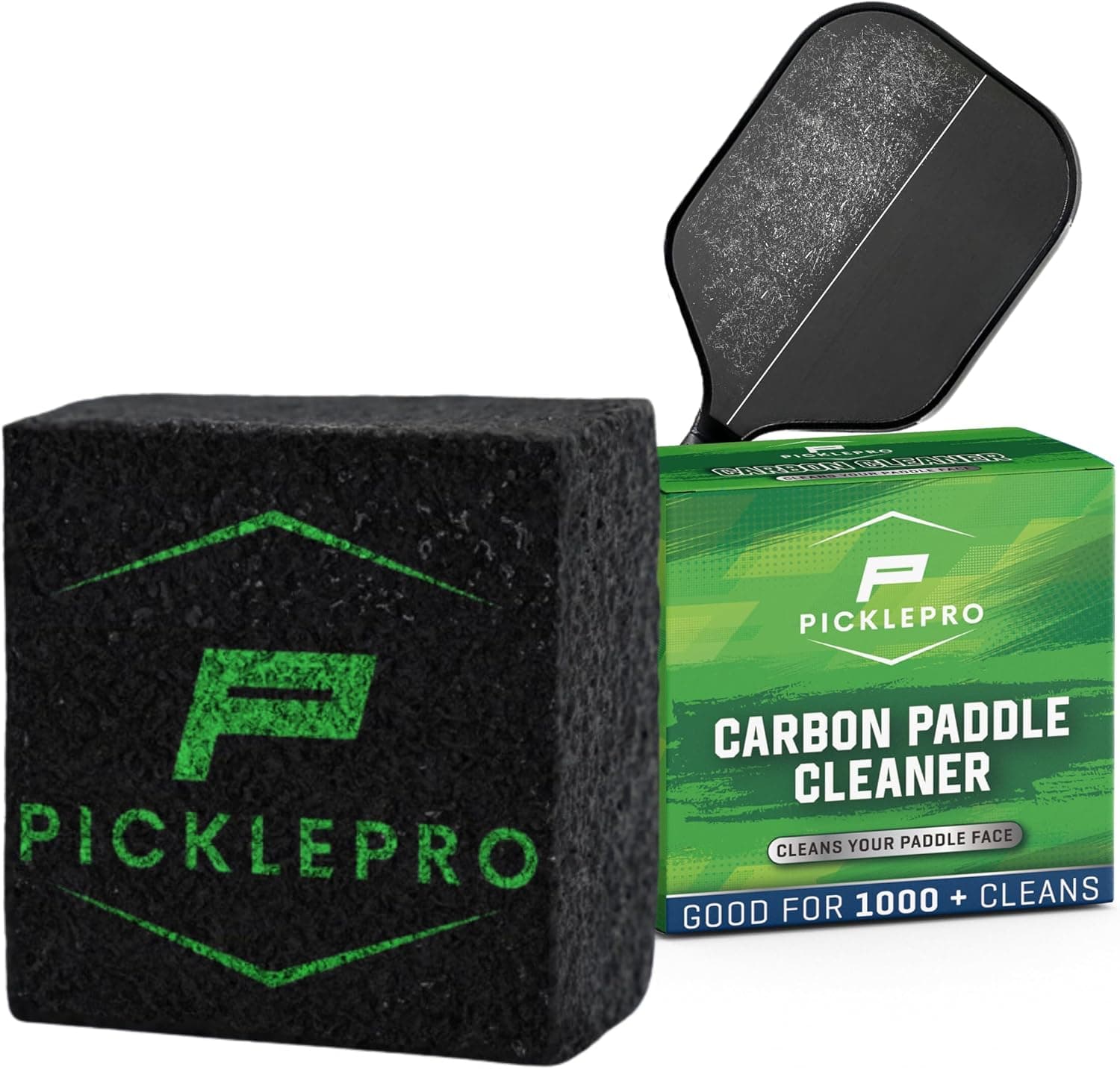
PicklePro premium rubber carbon paddle cleaner block, an eraser that restores grit on raw carbon fiber pickleball paddles.
Price range: See on Amazon
What we liked
- + Rubber block lifts ball residue that dulls spin on raw carbon faces
- + Designed specifically for raw carbon fiber paddle surfaces
- + Regular cleaning keeps a paddle's texture performing longer
Trade-offs
- - Cannot restore grit once the carbon texture is physically worn away
- - Not intended for smooth graphite or painted paddle faces
What a carbon paddle eraser actually does
Raw carbon fiber paddle faces rely on a textured surface to grip the ball and generate spin, but that texture gradually fills in with ball residue, dirt and fine carbon dust that builds up from normal play over weeks and months. The PicklePro block is a rubber eraser designed to be rubbed across the face to lift that buildup out of the pores, similar in concept to how a pencil eraser lifts graphite marks off a sheet of paper. The goal is not to change the paddle's shape or add new texture to the surface, but to restore the friction the face had when it was new by clearing debris out of the existing surface pattern that grips the ball.
Marketed durability and use case
The product is described by the seller as good for roughly 1000 uses, positioning it as a longer-lasting accessory rather than a one-time consumable, though actual lifespan will vary with how hard a player scrubs and how often the paddle gets dirty during play. It is built specifically for raw, unpainted carbon fiber faces, which is the same category of paddle surface used by many current spin-focused paddles on the market today. Cleaning with a rubber eraser is typically recommended as a between-matches habit rather than a one-time fix, since residue and grip loss build back up again during the next few sessions of regular play.
What it will not fix
An eraser block only removes surface debris sitting in the existing texture; it cannot restore grip on a paddle where the raw carbon texture itself has physically worn smooth from months or years of play, since there is no remaining texture left to clean out of the surface. It is also intended for raw carbon fiber faces specifically, not smooth graphite or painted composite surfaces, since those paddle types were not designed with the same textured pore structure that residue tends to clog over time. Players should treat this as ongoing maintenance for texture that already exists rather than a way to add spin capability to a paddle that never had a textured face to begin with.
Where it fits against rival erasers
PicklePro sits in a crowded field of carbon cleaner blocks from brands like CRBN, Professor Pickleball and YOTIGER that all work on the same principle of rubbing a rubber block over a raw carbon face to lift out residue. The main differences between these competing erasers tend to come down to price, block size and brand-stated lifespan claims rather than any fundamentally different cleaning method, since the rubbing-block approach itself is fairly standardized across the whole category of accessories. Buyers comparing options should weigh price against stated use-count claims rather than expecting meaningfully different cleaning results between similarly designed rubber blocks from different sellers.
Who should buy this eraser
This is a sensible pickup for anyone who owns a raw carbon fiber paddle and has noticed the face feels less grippy or produces less spin than it did when new, especially players who play often enough for residue to build up quickly between sessions. It is a low-cost way to extend the useful life of a textured paddle face between matches without buying cleaning solutions, sprays or other specialty maintenance products. Players with a painted, smooth graphite or fiberglass-faced paddle should skip this product entirely and look for a cleaner suited to their specific paddle surface material instead of assuming this one will work the same way.
Frequently asked questions
What paddle types does this work on?
It is designed for raw, unpainted carbon fiber paddle faces and is not intended for smooth graphite or painted paddle surfaces.
How long does the eraser last?
The seller states it is good for around 1000 uses, though actual lifespan depends on how often and how hard it is used.
Can it fix a worn-out paddle face?
No, it only lifts residue and dirt out of existing texture; it cannot restore grip once the carbon texture itself has physically worn smooth.
How often should I use it?
Most players use a carbon eraser between matches or sessions as ongoing maintenance, since residue builds back up during play.
Prices change often, so check the current price and availability on Amazon.
Check price on AmazonPickleball Kit Hub may earn a commission from the link above.